
Normally I’ll post on Monday mornings when the week is getting kicked off and everyone’s got a hot cup of coffee and their desk ready to dive into what matters to them most. This week I spent much more time thinking about the message that I really want to deliver, and I came up with something that Atria has advocated from the very beginning; our 4 C’s. Particularly the order the C’s are in, which is not accidental. When Atria was founded, it wasn’t created to chase market share — it was created to fill a void. Middle-market employers, including tribal nations, have long been underserved by the brokerage world. The Fortune 500 and private-equity-backed firms dominate the national stage, but their culture doesn’t fit the middle market. Their loyalties are to shareholders, not clients. Their decisions serve quarterly earnings, not the long-term health of a 500-employee manufacturer, a 2,000-employee healthcare system, or a sovereign tribal government protecting its people and programs.
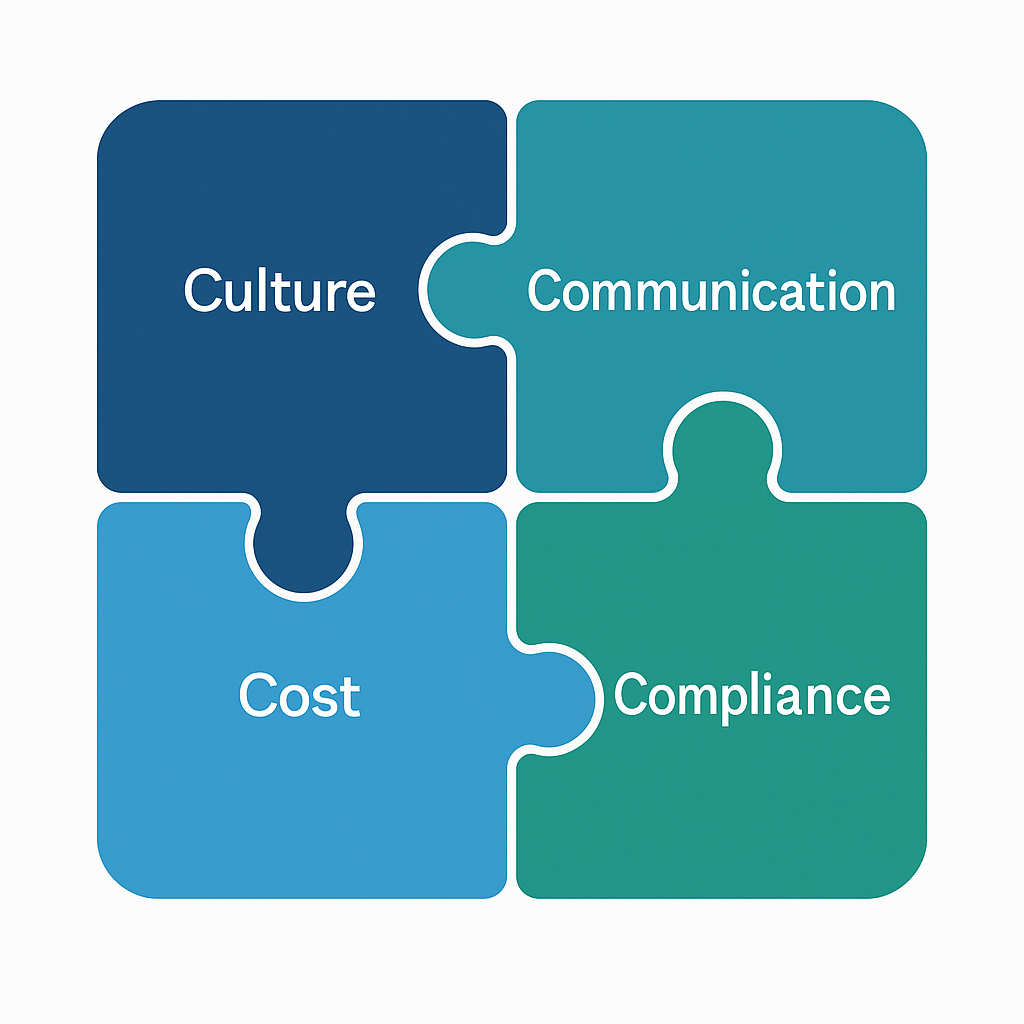
Atria was built to change that dynamic — to prove that expertise, passion, and integrity could thrive without compromising culture. We designed the firm around four guiding principles: Culture, Communication, Cost, and Compliance. And their order isn’t random. It’s intentional. Each “C” builds upon the next, creating a hierarchy of impact that mirrors what true partnership looks like in the middle market.
Culture: The Foundation That Everything Else Rests On
Culture is number one for a reason. In the middle market — whether tribal or private enterprise — business isn’t built on quarterly reports or stock performance. It’s built on relationships, trust, and shared success. At Atria, we don’t measure outcomes in commissions or growth percentages; we measure them in how our clients feel about the work we do together. Every handshake, every phone call, every late-night strategy session matters.
Large brokers can’t replicate that. Their culture is built for scale, not sincerity. But middle-market organizations need more than transactional service. They need an advisor who understands that protecting what’s been built means protecting people — families, livelihoods, and futures. That’s why Atria’s culture centers on care. We invest deeply in our clients’ missions because we see ourselves as an extension of their leadership team, not as a vendor. In tribal partnerships especially, this alignment is sacred — and rare. We approach those relationships with humility, respect, and a shared sense of stewardship.
Communication: The Cornerstone of Understanding
Culture without communication is just noise. The second “C” defines how we bring clarity to complexity — both in executive strategy and employee education. In our combined decades in this business, one truth stands unshaken: even the best-designed risk or benefits strategy fails if it isn’t communicated well.
We’ve taken on clients that came from the largest brokerage houses in the country — firms with enormous marketing departments and global resources — and yet their employees were uninformed, underinsured, or misunderstood their coverage entirely. Not because the plans were bad, but because no one took the time to explain them. Communication is where Atria separates itself. We translate risk, benefits, and compliance into plain language that both decision-makers and employees understand. That includes leadership meetings, board sessions, digital benefits portals, on-site meetings, and one-on-one consultations — the kind of real communication that builds connection.
Cost: A Strategic Lever — Not a Race to the Bottom
Cost is third for a reason — because it must be informed by culture and communication. The middle market can’t afford to overspend, but neither can it afford to underinsure. Large firms often chase pricing like a contest, cutting corners or playing shell games with coverage to win business. That’s not stewardship; that’s shortsightedness.
At Atria, we take cost seriously — but never in isolation. Our team is known for being among the toughest negotiators in the business because we know exactly what’s at stake for our clients. We don’t chase low premiums just to win the deal. We pursue value: strategic funding models, captives, self-funding, data-driven pharmacy programs, and stop-loss terms that protect the balance sheet while empowering long-term growth. Our cost philosophy is simple: protect the mission before you protect the margin.
Compliance: Integrity in Action
Compliance sits fourth not because it’s an afterthought — but because it’s the anchor. A strategy without compliance discipline is a strategy waiting to fail. We maintain a relentless focus on federal, state, and tribal regulatory alignment so our clients can focus on running their businesses without fear of fines, penalties, or reputational damage.
We’ve built internal systems and relationships with legal experts to keep our clients ahead of evolving legislation — from ACA affordability thresholds to mental health parity, from pharmacy transparency rules to international data privacy requirements. Our role is not just to advise, but to shield — to protect our clients’ employees, leadership, and reputation through proactive governance and education. For our tribal partners, this extends to navigating the unique intersection of federal compliance and sovereign governance — where diligence and respect are paramount.
The Order Matters — Because People Matter
Culture comes first because without cultural alignment, nothing else works. Communication follows because understanding is what turns partnership into progress. Cost and compliance come next because sound strategies and legal integrity are the natural result of getting the first two right. This isn’t a marketing slogan. It’s how we operate, how we recruit, how we serve, and how we choose our partners.
We don’t work with everyone — only with employers who take risk strategy as seriously as we do. Those who expect excellence, appreciate honesty, and believe that their advisor should care as much about their people as they do. That’s what the Four C’s mean to us. It’s not just how we work. It’s who we are.
Bottom Line
The Four C’s were built to solve a cultural gap in this industry — one that Fortune 500 brokers can’t fill. They represent Atria’s promise to the middle market and to tribal nations: to deliver expertise without ego, negotiation without compromise, and relationships without expiration dates. We don’t have shareholders. We have partners. We don’t serve quarterly results. We serve people — and that’s the difference that endures.
This article is for informational purposes only and should not be considered legal or tax advice.